Welcome to CatholicPreacher! I use this page as a type of archive of my thoughts for my Sunday homily.

Sunday, December 22, 2019

Fourth Sunday of Advent


It's All in the Family

            Today’s Old Testament short reading needs a bit of background:
 So, the Jewish world is divided during the time referred to by Isaiah; the northern and southern kingdoms.  The northern kingdom is Israel, and the southern one is Judah (of which Jerusalem is a part and where the Temple is located).  To make a long story (a few thousand years) shorter, Israel’s king was in cahoots with the king of Aram to lay siege to Jerusalem.  Judah’s king (Ahaz), against the advice of the prophet Isaiah, makes an alliance with Assyria saying, “I am your servant and vassal. Come up and save me out of the hand of the king of Aram and of the king of Israel, who are attacking me.”  Ahaz gives the Assyrian king treasure from the Temple (and palace) as an incentive to help.  Ahaz knows this is wrong to rely on outside help, and Isaiah counsels unconditional faith and reliance on God; Ahaz piously refuses. Ahaz’s son Hezekiah became the “savior” of his people, likely the child referred to by Isaiah in his prophecy to Ahaz:” …the young woman [also translated virgin] shall conceive, and bear a son, and shall name him Emmanuel.”  Hezekiah restores the righteousness of Judah and defeats the king of Assyria.  He re-centralizes the Passover worship and invites all tribes to Jerusalem for Passover, restoring righteous rule in Jerusalem.
            Both Matthew and Luke pick up on this narrative framework in their account of Jesus’ birth. God’s help for Judah was of great comfort to the early Christians who, like Judah, were under “siege”.  Jesus’ birth under the Davidic line assures Matthew’s audience of a savior who is the final fulfillment of God’s promise of salvation, the ultimate Emmanuel.
            Although Jesus did not make much of his ancestry---probably to de-emphasize the nature of his reign as spiritual rather than temporal---the post-Easter Christian community re-emphasized this as a source of authority and claim on messiahship.  The Davidic emphasis in the New Testament emphasizes Jesus’ lowly, earthly life when contrasted with the risen savior of the Resurrection (Reginald Fuller).
            The remarkable birth of Jesus as a convergence between the earthly lineage and the divine is a great symbol of the genesis of our restoration with God through Christ’s earthly ministry and the subsequent indwelling of the Holy Spirit; God with us, after the Resurrection, becomes God within us. Christmas is the promise realized to its fulfillment in the post-Easter community.  We have become part now of the Davidic line, through Christ, and by God’s adoption of us as co-heirs (not heirs!) with Christ of God’s promise of salvation. As the saying goes, God has no grandchildren; Jesus is our brother. We are family by God’s choice.

Sunday, December 15, 2019

Third Sunday of Advent


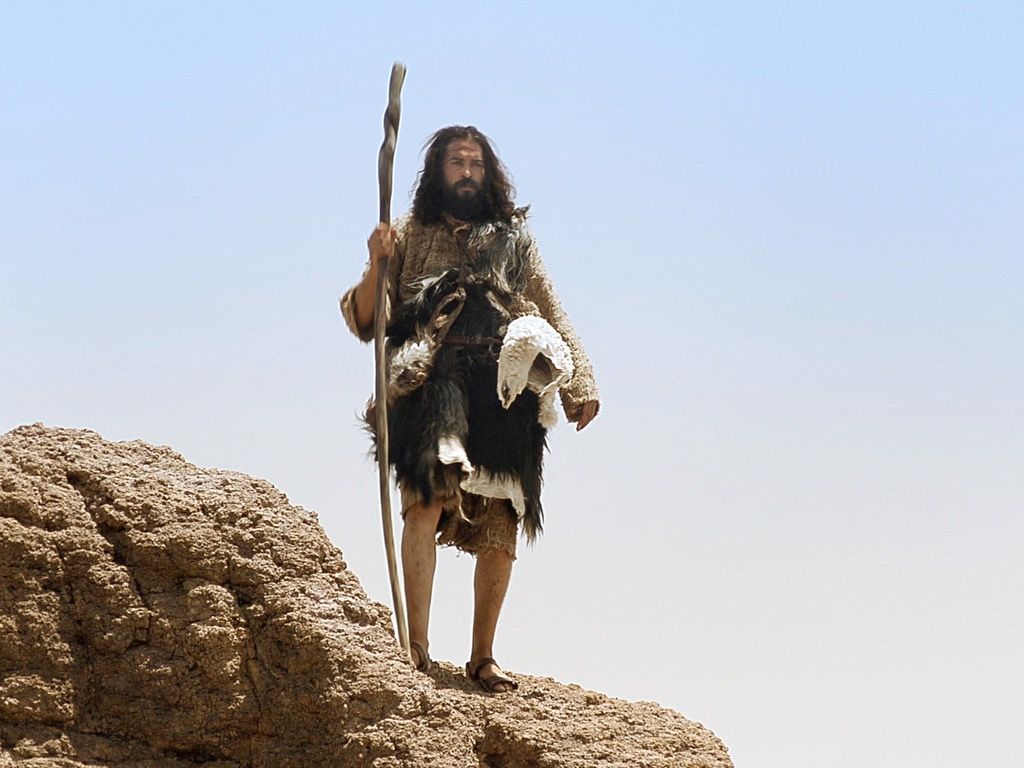
“Are you the one who is to come, or should we look for another?”John the Baptist asking about Jesus.


  The most striking part of today’s gospel is John’s disillusionment with Jesus embodied in his question sent by messenger to Jesus: “Are you the one who is to come, or should we look for another?”  Jesus’ reply, however, is even more striking.  Instead of simply saying, “Yes, I am he,” he asks the messenger to report back to John what he has seen:


“…the blind regain their sight,
the lame walk,
lepers are cleansed,
the deaf hear,
the dead are raised,
and the poor have the good news proclaimed to them.”


            Notice Jesus isn’t saying, “I give the blind their sight, I heal the lame,” but is directing the attention to the acts themselves as evidence of God’s presence surrounding his ministry.  The messenger is asked to witness the Kingdom of God Jesus has begun. Jesus isn’t trying to prove his divinity; he is announcing God being in their midst, calling for practice before doctrine.
            Above all other things, the Kingdom of Heaven/God is built upon acts of healing and justice as signs of God’s presence.  To find the Messiah, you need to look where the Messiah hangs out: with those who are outcasts, sick, and poor.  God’s kingdom, as Jesus proclaimed to Pilate, “is not of this world,” but what he didn’t explain was that it can be found in this world. He knew that the hardness of Pilate’s heart would prevent him from seeing God’s grace in action because, like so many, Pilate would have looked for the Messiah as a group of devoted Jews looking to establish a new political order.
            Like many of us, John finds it difficult to believe that God’s justice does not involve some new political order, a new way of organizing society, yet another manifesto that, if we interpret it correctly and follow it faithfully, is guaranteed “heaven on earth”; that is not the kingdom of Heaven. The Kingdom is built around a way of being in this world but not being of this world. 
            It is telling the reaction of the crowd who encountered Jesus in John’s place.  In the next section of the gospel, after Jesus declares, “…blessed is the one who takes no offense at me,” we see the crowd leaving and Jesus calling out to them:


“What did you expect to see?  A reed swayed by the wind?  Then what did you expect to see?  Someone dressed in fine clothing?  Those who wear fine clothing are in royal palaces.  Then why did you go out? To see a prophet?”


            Jesus then affirms John’s role as the preparer of the way while proclaiming, “The least in the kingdom of heaven is greater than he.” It is time to begin our journey on the way rather than stay prepared.  It is time to follow God’s trail that leads to the poor, the diseased, and the discarded humanity, who are beacons for God’s presence in our world today. When we are in the presence of these people, away from power and influence, we find the Christ Child.

Saturday, December 7, 2019

Second Sunday of Advent


Ready the Way of the Lord

"His winnowing fan is in his hand; he will clear his threshing floor"(John the Baptist)

Today, we shift from focusing on the “end times” to the other end of our journey, preparing for the coming of the Messiah!  It is a preparation that harkens back to when John the Baptist was preparing the way by preaching repentance in the wilderness. Still, the preparation we live in today anticipates the revelation of God’s kingdom more perfectly.
            We begin our story as Christians often do with our Jewish brothers and sisters who first heard and responded to God’s revelation.  Isaiah’s text celebrates the arrival of the perfect king with three sets of distinguishing virtues: deep wisdom and understanding, might and counsel, and knowledge and fear of God—virtues of intelligence, practical ability, and piety.  What more could one ask of a leader?  Alas, this hope faded over time. 
            With the birth of Jesus, King of King and Lord of Lords, Emmanuel—God-With-Us, the kingdom was not fully realized, but Jesus’ coming set in motion the building of the kingdom.  Just as John pointed the way of Messiah, Jesus pointed the way to God’s Kingdom, and the Holy Spirit continues to guide us and provide us with hope.  John’s “reading of the way” now is transformed into our mandate to “walk the way” made by Jesus for people who were originally known as “People of the Way.”
            John’s preparation of repentance for the coming of Jesus the first time is still valid today for us who set out on the way of Christ.  Before we plot a course, we have to know where we are in relationship to our destination; that is why repentance is part of Advent.  Repentance, as the word suggests, orients us a hundred and eighty degrees from our present course; it turns us around and gets us going in the right direction. John uses the image of the winnowing fan separating the valuable wheat from the waste of the chaff.  The chaff is the lighter and unusable part of the wheat and must be separated from the valuable kernel of the wheat itself.  Often this is preached as a metaphor for God punishing the unrighteous as “chaff he will burn with unquenchable fire.”  While this may be valid, it is also an opportunity to see a more personal dimension to repentance. The chaff is all those things that accumulate in our lives that obscure the true wheat of Christ; the Good News.  Through the ministration of the Holy Spirit, the Breath of God, we can let go of all that is not Good News for ourselves and others. Advent is a time for looking at what we cling to that keeps us from paying attention to our destination, for dulling our sense of direction and the destination.

Sunday, November 24, 2019

Christ the King


There is that famous line from Mel Brooks's movie History of the World: Part I, "It's good to be king!"  Being king brings up beautiful imagery of elaborate court ritual, absolute authority, and feasting; sounds a lot like the institutional church!   But Jesus' words to Pilate betray this image of opulence.  When asked about his kingdom, Jesus replies "My kingdom does not belong to this world" (New American Bible).  Another translation has it as "My kingdom is not of this world"(New International Version).  The sense of Jesus' reply is that his kingdom is neither the kingdom of Rome nor the kingdom envisioned by the religious authorities; both groups lose.

The Solemnity of Christ the King that embraces Jesus as king is relatively new.  It was established in 1925 to counter what the Church saw as an increasing tendency to worship human wisdom and power, which was loosely defined as modernism.  Later, positioning the solemnity at the end of the Church's liturgical year in 1969 further enhanced its standing as the summit of Christ's rule andimplicitly, the Church as Christ's kingdom.

However, the songs and imagery associated with this celebration often blunt the irony of Christ as king.  The common representation is a resurrected, non-bloody Jesus hovering (rather than being nailed) on the cross.  The image of Christ as king is ironic because he is the king with a crown of thorns a procession of humiliation, and a knightly court of cowards.  It seems as St. Paul writes in his letter to the Corinthians, "For the message of the cross is foolishness to those who are perishing, but to us who are being saved, it is the power of God."

The ironic image of Jesus as king nailed to the cross speaks of a different kind of power than the power of earthly kingdoms.  In a general audience at the Vatican, Pope Benedict XVI suggests

"The power of God's kingdom as embodied by Jesus' death isn't exclusively revealed by the resurrection, although the saving power of God is most apparent here. The magnitude of God's love for His creation in self-sacrifice shows Christ's real power as king. " 

The ultimate love is the love that sacrifices self for another. This is the real power that defines Christ's kingdom.  This is why evil can never ultimately triumph over good; evil avoids self-sacrifice.  Evil always seeks what is best for the self over and against the other.  It destroys the community and ultimately destroys itself.

On the other hand, self-sacrificing love is the ultimate Christian act where one falls into the opened arms of Christ on the cross, trusting in the power of God's ability to bring life from death.  Christ's kingdom is not of this world, but it is for this world.  Nothing is more important than conforming to this likeness of Christ as King.

Sunday, November 3, 2019

Twenty-first Sunday after Pentecost


“Never put a period where God has put a comma”—Gracie Allen

Zacchaeus was just about the most despised Jew among the Jewish people living in Jericho. He was the Chief Tax Collector; he ran the crew of collectors that exploited the poor and grew rich off of the weakest of society. Is it any wonder, then, when Jesus decided to stay at Zacchaeus’ house that his disciples grumbled; they had good reason to grumble. Once again, we have a story that puts conventional wisdom to the test and puts on display “God’s foolishness”(2 Corinthians).
The structure of the story can help us enter the story and sort out this “foolishness”. First, Jesus calls Zacchaeus by name. No matter where we are in life, no matter how distant from what others recognize as God’s favor, we are being sought-out like a shepherd for a single lost lamb.
Zacchaeus climbed a tree to see Christ.  Earlier in Luke, just after Jesus responded to the disciples’ request “to teach us to pray” with the Lord’s Prayer, Jesus says “So I say to you: Ask, and it will be given you; search, and you will find; knock, and the door will be opened for you. For everyone who asks receives, and everyone who searches finds, and for everyone who knocks, the door will be opened” (11:9-10).
Having been found, Zacchaeus’ response was to make reparation for his sins. Rather than simply confessing, he changed his life. Our response to our calling is a changed life; repentance means turning around.  Salvation is preceded by repentance, but it is the saving Grace of God that brings us to our knees; it is God’s loving us that allows such a repentant attitude. We can only repent if we can experience the depth of God’s love.

As Christians, our mission is the mission of Christ: Seek the lost and let them see God’s love for them, and the place to begin is with your own “lostness”. In our adoration of the Body of Christ, it is we who are in the tree trying to get a glimpse of Jesus, and it is Christ who speaks to our hearts: “Today I will come and stay with you”.

Sunday, October 27, 2019

Twentieth Sunday after Pentecost


Meister Eckhart, one of the church's great mystics, famously wrote that if you only had a single prayer to pray, "Thank you" would suffice.
This week, we continue with the general theme of prayer with the righteous Pharisee as an exemplar of how not to pray and the sinful "publican," or tax collector, the one an exemplar of how to pray.  As usual, the unexpected is central to this parable, but this is not one of Jesus' many Kingdom parables; rather, it is a parable relating directly to God.
      Jesus famously told his disciples what to pray with the gift of the Our Father; however, he didn't answer the question directly when asked by his disciples how to pray.  Today’s gospel is all about mercy.
     The Pharisee's prayer was more horizontal than vertical; his prayer was self-congratulatory for not being like his sinful neighbors. His prayer was from an island of self-righteousness.
 
O God, I thank you that I am not like the rest of humanity --
greedy, dishonest, adulterous -- or even like this tax collector.
I fast twice a week, and I pay tithes on my whole income.
 
His gratitude springs from "not being like the rest of humanity," it begins in separation, focusing on his side-view of a sinner.  And the tax collector was a sinner.  Let's not make him into some noble hero.  Tax collectors were famous sellouts in Jesus' time.  They were Jews who profited from their association with the Romans and were allowed to keep whatever they could collect above required from their fellow Jews and had the power to have non-compliant Jews arrested.  As with most people invested in such power, the power was abused, and these folks were famously despised. 
            The Pharisees were a group of religious scholars who were trying to bring the average person hope by helping one live a righteous life through putting the Law into practice.  The Pharisee's pride grew from being socially, educationally, and religiously set apart from the people he was called to lead.  There is a lesson in it for me as a priest and anyone with temporal authority within the Church.  I can imagine such pride was incremental and crept in as he appropriated each compliment and praise received from the people he helped, growing like a wildfire until it consumed him in the deception that what they adored was him rather than God's gift to him.  The tax collector had no such delusions.
     The tax collector's prayer was vertical; off at a distance and prostrated, he couldn't even see or hear the Pharisee.  The tax collector's sins were too painful for him to list.  He simply prays, "Have mercy on me, a sinner!" Scripture says he went away justified; God forgave his sins not because he was righteous but because he prayed from his poverty of spirit.  The Pharisee prayed from what he considered his great possessions: his righteousness. Like the widow only putting in a mite for the Temple collection, she gives all she has.  She isn't donating a small portion of her wealth; Jesus observes in that parable that "she gave from her poverty."  We must pray from our poverty because this is our state in relation to God.  We have nothing to stand on but clay feet, but it is the same clay God formed; it is human clay, and it is the source of true humility and genuine gratitude because God has redeemed it in Christ.  
     When we pray from our poverty, we tap into the riches that God has given us.  Time and time again, God's grace seeks out the humble, the lowly, and the dispossessed.  Throughout salvation history, God visits the least regarded and comes to visit and give great comfort.  There is something in the nature of God that desires such intimacy as that of a mother caring for her sick child. We don't need to be great and notorious sinners to attract God's love; it is there before we ask. God is in love with humanity, and the less we stand human before God, the more distorted our understanding of the image of God within us.
          The Oscar Wilde quotation, "We are all in the gutter, but some of us are looking at the stars," comes to mind. Our prayer is always a cry for mercy when we begin with being grateful for having the vision of the stars from the gutter.

Sunday, October 20, 2019

Nineteenth Sunday after Pentecost


"Rejoice always, pray continually, give thanks in all circumstances"  1Thessalonians 5:16-17

“If the only prayer you said was thank you, that would be enough.”
Meister Eckhart

One of the greatest acts of faith is prayer. Prayer acknowledges God explicitly and is done with the hope that God is listening.  To surround one's daily life in prayer, to strive to "pray without ceasing" is to hold on to the tail of a tiger and not let go.

      Today's gospel has a widow holding on to the tail of a tiger in the form of a judge who refuses to hear her case, but she prevails in the end because she refuses to let the matter drop.  Out of sheer fatigue, boredom, or a desire to simply get on with it, the judge finally relents, and she is afforded justice because of her perseverance.  Jesus uses this story to suggest that his disciples will soon find themselves like the widow, alone and in need of help, and that the only way to proceed is to pray and not lose faith.  Jesus links faith with the endurance of prayer by asking, "But when the Son of Man comes, will he find faith on earth?"

     How much more, Jesus reasons, will God who loves you hear your prayer and act decisively to render judgment? The word "quickly" in the scripture does not indicate a short time from asking, but rather the speed of God's action once God acts, His decisiveness.  As we read a couple of weeks ago, faith the size of a mustard seed is all that is required because faith is not measured in degrees; it is experienced by its presence or absence. 

     Faith is not something that is mainly feeling but is an action guided by the will and sustained by the strength of hope.  Though we tire, and at times fail to pray formally, our fatigue and desire for prayer itself is a prayer.   Reciting to oneself, "Oh God, I wish I could pray," is a prayer.  Constant prayer is living with this awareness.

    The strong tradition of the "Jesus Prayer" in the Orthodox Church ("Lord Jesus Christ, have mercy on me, a sinner") is the mantra-like prayer that infuses one's being so that prayer is made constant in the awareness of one's beating heart or breathing.   The practice of stillness, or waiting upon God as prayer, has a long and honored tradition within Christianity. Lighting a candle, paying attention to one's breath, and only finding oneself in God's presence is also prayer.  Today, we might say that books on all manner of praying abound, and sell very well; whether or not anyone is praying is another matter.

     Prayer may not satisfy us that we are praying, but this need not distract us.  Lifting our hearts to God, desiring to be seen by God in our hesitation, our fear, and our inability to form words, allows the Spirit to pray in us and through us.  Being involved in praying can be as simple as sitting quietly and listening for God's "quiet, whispering voice."  We don't have faith because we pray.  We pray because we already have faith. It is God, through the Holy Spirit, who ultimately makes prayer possible.  We have this great stream of prayer running directly through our hearts like a great torrent.  We have only to jump in and let it carry us for God's "quickness" to be realized.