Welcome to CatholicPreacher! I use this page as a type of archive of my thoughts for my Sunday homily.

Saturday, April 8, 2023

Easter Sunday of the Lord's Resurrection


From Death to Life


The older I get, the less concerned I am about the historical facts of my faith.  Don't get me wrong, if I could know some historical fact regarding the life, death, and resurrection of Jesus, I'd jump at the opportunity; it's more a matter of accepting the inherent limitations of living a life of faith regarding the type of knowledge faith reveals.  I see so many folks trading their faith for a type of intellectual dishonesty that makes bizarre claims in an attempt to find empirical backing for what they claim to already believe.  Based on biblical passages, Harold Camping calculated the exact time for Christ’s return. For Harold, this wasn’t faith but empirical truth. He convinced others.  The time came and went.  Nothing.  Another date was set; his calculations were a bit off the first time.  The time came and went.  Nothing.  Finally, Camping admitted he got the whole thing wrong and will no longer make any further predictions.  Humiliated, alone, and pilloried in the press, Harold Camping takes his first step towards resurrection: crucifixion.  

There is no other way to resurrection than through crucifixion.  This is the substance of my faith when I proclaim each Sunday, "He was crucified, died, and buried.  On the third day, he rose again by the scriptures." 

Crucifixion forces our hand to break our plans for an orderly and carefully controlled life and puts us at the feet of the cross or on it.  We will likely never have empirical, historical evidence of Jesus’ bodily resurrection; this is faith. Still, one thing is eminently probable: Jesus was killed on the cross by Roman and religious authorities who were threatened by the instability of challenged metaphors: Jesus said he was a king, and Jesus said he was the Messiah.  The only possible way Jesus could walk to the cross was a faith born not in what would come after but in the sustaining relationship of love he had with the Father.  Jesus' fear and feeling of dejection in murmuring the 22nd Psalm, "My God, my God, why have you forsaken me," ends with the 31st Psalm: "Into your hands, O Lord, I commend my spirit."  

The Resurrection is what happened after.  The disciples witnessed it according to the accounts of Scripture.  But my faith finds its foundation in the resurrections I've experienced in others and in myself that have their origin in The Resurrection. 

Easter is the "difficult birth" of a faith borne on the cross of one who died two thousand years ago and claimed to be a king and Messiah. Still, the millions of new lives hewn from the roughness of the Cross are witness to a deeper and more profound truth than an historical event, and the Resurrection has lived long after Jesus walked the earth.

Thursday, March 30, 2023

Palm Sunday of the Lord's Passion


Later Sunday afternoon of Palm Sunday, we begin Holy Week. We see the Passion from Jesus' entry into Jerusalem to rolling the stone to seal the tomb. On Monday, we rewind to six days before Passover, followed by Tuesday and Wednesday with the Passover meal and Jesus' subsequent betrayal by Judas. Holy Thursday is Jesus washing his disciple's feet and telling them, "If I, therefore, the master and teacher, have washed your feet, you ought to wash one another’s feet." Good Friday. We, once again, meditate on The Cross.

So Sunday and Friday, we speak of the Lord's passion, of God's love of His creation.

Passion.  The word evokes reckless adventure, impulsive romance, gestures too big to fulfill, and the brief but intense relationship of Romeo and Juliet.  This word places Jesus in the tradition of the foolish Romantics—an itinerant preacher from the margins schooled by his radical cousin (John the Baptist) and led to make one final, dramatic gesture to get his message out: die as a martyr.  But Jesus’ death was unlike many of the martyred faithful to come.  His death wasn't for a cause but a relationship.  God fell hopelessly in love with humanity and inserted Himself to be with His own creation to deliver this message of healing, love, and forgiveness.  God’s power isn't the power of Zeus with lightning bolts from the heavens, but God’s message is now simply “Return; I love you.”

Throughout Holy Scripture, God has struggled and seemingly failed many times, just as His people have.  It has been an on-and-off-again cosmic love story between the Creator and His creation since humanity was first created and was given a choice not to love God.  This dance between Creator and created culminated in His great and defining act of love: self-sacrifice on the cross.

Today’s gospel reading recounts this journey to the cross with Jesus as God leading the way, experiencing the pain and abandonment of His creation, the physical pain of a gruesome, ignominious death, giving into the abyss of his own uncreated end---all for love.  But in this remarkable journey, he found a few responding with courage: Simon of Cyrene shared some in your suffering, the women who gathered at the foot of the cross and stayed there long after the men had scattered for fear of being arrested, the felon who believed because he, of all people, responded to the suffering of an innocent man, and finally the Roman centurion who saw in this suffering man God’s love.  This is pretty intense stuff.

Rather than struggling to believe, many struggle to disbelieve because God’s affirmation of his creation, of saying “yes” to the cross, is the ultimate folly for a world seeking certainty over mystery.  God, as Jesus was crucified, dead, and buried.  Stay tuned.

Tuesday, March 7, 2023

Second Sunday of Lent


On a Journey, but Not Alone
Jesus and Abraham are on a journey in today’s readings, or rather at the beginning of a journey. In the case of Abraham (Abram), God’s promise was to begin a new people dedicated to God alone. In the case of Jesus, Jesus’ ministry in Galilee had ended, and he was preparing to begin his journey toward Jerusalem to fulfill his sacrificial calling and redemptive act for humanity.
It is easy to forget that Jesus was also human and had limitations on what he could know and understand. He had perfect communion with God and a firm understanding of his mission, but he still had to choose. There is evidence in last week’s gospel of Jesus in the desert that Satan did not depart from him permanently but only “for a time.” This suggests Jesus’ struggle to choose what is right continued, but his communion with God the Father sustained him, although it is plain he did suffer. Likewise, Abraham was only beginning his walk with God. Abraham himself was tested by the call to sacrifice Isaac, his only son, and so began the journey to the Promised Land and the generations of people struggling to maintain their relationship with God.


It is a good time to consider our faithfulness to God. We, too, have been promised much, and we, too, struggle to remain faithful to our relationship with God. This is often associated with responding to a particular call when we hear the voice of God. For the faithful, it is not that God won’t speak, but they don’t like what He says. This dislike is often associated with what seems to be the impossibility or impractical nature of the call. 
One’s call, or vocation, can be tied to a gift, but it can also be tied to a weakness. Think of Moses, who had difficulty in speech, being called to lead his people. Likewise, both Abraham and Jesus were called to what must have seemed an impossibility. Ultimately, it is our degree of faith that allows us to respond accordingly. The “leap,” though, gets us going.

First Sunday of Lent


Follow Me.  I Know the Way Out.
Hunger, Powerlessness, and Inadequacy:  These are the weak spots Jesus struggled with.  Very often, we consider the battle and Jesus’ victory and overlook how the desert affected Jesus.  For us, going into the desert for forty days would involve a backpack full of food; it would be suicide to make such a journey without sufficient food and water; however, we can survive without food for forty days if we are in good health and have adequate water.  Jesus was hungry.  Fasting allowed Jesus to experience the temptation to be independent of needing others to bake his bread, as well as the understanding that life is more than the sum total of our physical desires and needs.  On a deeper level, Jesus experiences the profound understanding that, though the Son of God, he needs other people and that centering one’s life around physical desires is an error (Man does not live by bread alone, but by every word that proceeds from the mouth of God). Ultimately, we cannot even rely completely on human communion but upon God, our creator.

            Jesus’ next vulnerability was his feeling of powerlessness.  Exploiting this, Satan offers Jesus complete domination over the world’s countries if he would worship Satan.  Look at what being submissive to God the Father had gotten him: hunger pangs and feelings of worthlessness.  There is that famous line from Paradise Lost where Satan says, “Better to rule in hell than serve in Heaven.”  This was a test of Jesus’ resolve for the mission; success wasn't on Jesus’ terms; they were on God the Father’s.  He replies to Satan by quoting again from Deuteronomy, “You shall worship the Lord, your God, and him alone shall you serve.”   How often our fear of being powerless leads us to believe getting power is the answer, that realigning our priorities to become powerful is our ultimate goal rather than seeking the Kingdom and serving God.
            The final temptation came in a form quite unlike all the others.  It was the ultimate showdown.  In the desert of despair, with no visible sign of God’s presence and Satan close at hand, the desire to experience God’s care and concern in some manifestation becomes Jesus’ greatest vulnerability.  Just give me a sign of your love!  Everyone feels this, especially when things are not going well.  Satan’s answer was to call God’s hand and turn Jesus’ test into God’s test.  Now it is Satan who is quoting Scripture:

“He will command his angels concerning you, to guard you,”
and:
“With their hands, they will support you,
lest you dash your foot against a stone.
”

Satan quotes Psalm 91, and Jesus responds with a third passage from Deuteronomy  “You shall not put your Lord God to the test”.  The very source of his reasoning---Holy Scripture—was turned against him.  How often do foes of God’s love and unconditional grace bend scripture to turn it from a source of healing love to a weapon?  This round of Bible Darts over, Satan departs “for a time,” suggesting that the tenacity of Satan grows, not diminishes, with defeat.  Being holy and being hounded has a long tradition of being paired, but like Jesus, we may be in for a time in the desert; but simply because the journey gets tough doesn't mean we walk it alone.  At every turn, the community, animated by the Spirit, joins us and reminds us that we follow Christ into the desert.  As the man standing at the bottom of a deep pit asks the other man who came to help him why he jumped in to be with him, that now they both were stuck.  The man who jumped in to rescue him said, “Don’t worry.  I've been here before, and I know the way out”.

Wednesday, February 22, 2023

Ash Wednesday


Pray in Secret


The gospel admonition to seek out a type of secret piety rather than a public one isn't a rejection of public worship for an eremitical life; it is the cautionary tale of one who looks for the wrong thing in their worship.   Jesus notes that those who make a grand show of their piety receive what it is they are longing for: public adoration and acceptance.  I suppose there is nothing inherently wrong with public adoration and acceptance if this is one's goal, but it is not the goal of true worship.  True worship makes God the focus, not oneself.  The concept of the word "worship" in English suggests ascribing worth due to someone or something.  In a sense, our worship should express what we believe God is entitled to.  What is God entitled to, if not the entirety of our being? 

If we seek approval from others in our worship, Jesus says this is what we gain.  God can only be honored in true worship in the secret of our hearts.

Saturday, December 10, 2022

Third Sunday of Advent


Should we look for another?”


  The most striking part of today’s gospel is John’s disillusionment with Jesus, embodied in his question sent by messenger to Jesus: “Are you the one who is to come, or should we look for another?”  Jesus’ reply, however, is even more striking.  Instead of simply saying, “Yes, I am he,” he asks the messenger to report back to John what he has seen:


“…the blind regain their sight,
the lame walk,
lepers are cleansed,
the deaf hear,
the dead are raised,
and the poor have the good news proclaimed to them.”


            Notice Jesus isn’t saying, “I give the blind their sight, I heal the lame,” but is directing the attention to the acts themselves as evidence of God’s presence surrounding his ministry.  The messenger is asked to witness the Kingdom of God that Jesus has begun. Jesus isn’t trying to prove his divinity; he is announcing God being in their midst, calling for practice before doctrine.
            Above all other things, the Kingdom of Heaven/God is built upon acts of healing and justice as signs of God’s presence.  To find the Messiah, you need to look where the Messiah hangs out: with those who are outcasts, sick, and poor.  God’s kingdom, as Jesus proclaimed to Pilate, “is not of this world,” but what he didn’t explain was that it can be found in this world. He knew that the hardness of Pilate’s heart would prevent him from seeing God’s grace in action because, like so many, Pilate would have looked for the Messiah as a group of devoted Jews looking to establish a new political order.
            Like many of us, John finds it difficult to believe that God’s justice does not involve some new political order, a new way of organizing society, yet another manifesto that, if we interpret it correctly and follow it faithfully, is guaranteed “heaven on earth”; that is not the kingdom of Heaven. The Kingdom is built around a way of being in this world but not being of this world. 
            It is telling the reaction of the crowd who encountered Jesus in John’s place.  In the next section of the gospel, after Jesus declares, “…blessed is the one who takes no offense at me,” we see the crowd leaving and Jesus calling out to them:


“What did you expect to see?  A reed swayed by the wind?  Then what did you expect to see?  Someone dressed in fine clothing?  Those who wear fine clothing are in royal palaces.  Then why did you go out? To see a prophet?”


            Jesus then affirms John’s role as the preparer of the way while proclaiming, “The least in the kingdom of heaven is greater than he.” It is time to begin our journey on the way rather than stay prepared.  It is time to follow God’s trail that leads to the poor, the diseased, and the discarded humanity, who are beacons for God’s presence in our world today. When we are in the presence of these people, away from power and influence, we find the Christ Child.

Sunday, December 4, 2022

Second Sunday of Advent


Ready the Way of the Lord

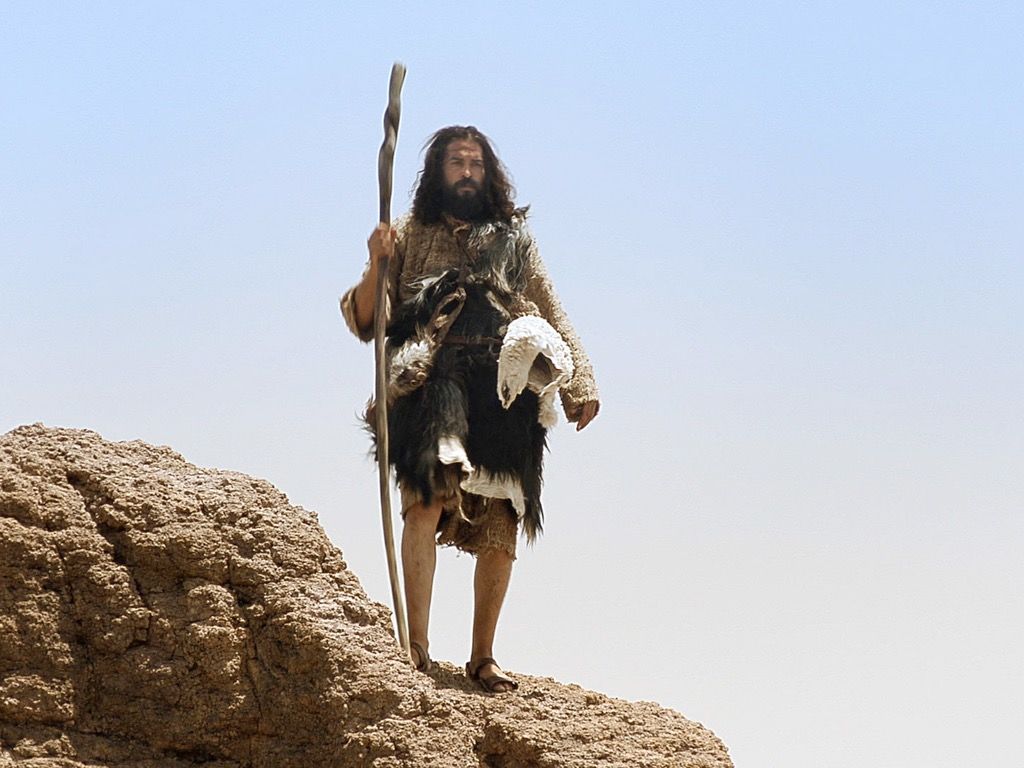
"His winnowing fan is in his hand; he will clear his threshing floor"(John the Baptist)

Today, we shift from focusing on the “end times” to the other end of our journey, preparing for the coming of the Messiah!  It is a preparation that harkens back to John the Baptist, who prepared the way by preaching repentance in the wilderness. Still, the preparation we live in today anticipates the revelation of God’s kingdom more perfectly.
            We begin our story as Christians often do, with our Jewish brothers and sisters, who first heard and responded to God’s revelation.  Isaiah’s text celebrates the arrival of the perfect king with three sets of distinguishing virtues: deep wisdom and understanding, might and counsel, and knowledge and fear of God—virtues of intelligence, practical ability, and piety.  What more could one ask of a leader?  Alas, this hope faded over time. 
            With the birth of Jesus, King of Kings and Lord of Lords, Emmanuel—God-With-Us —the kingdom was not fully realized, but Jesus’ coming set in motion the building of the kingdom.  Just as John pointed the way to the Messiah, Jesus pointed the way to God’s Kingdom, and the Holy Spirit continues to guide us and provide us with hope.  John’s “preparing the way” now is transformed into our mandate to “walk the way” made by Jesus for people who were originally known as “People of the Way.”
            John’s preparation of repentance for the coming of Jesus the first time is still valid today for us who set out on the way of Christ.  Before we plot a course, we have to know where we are in relation to our destination; that is why repentance is part of Advent.  Repentance, as the word suggests, orients us a hundred and eighty degrees from our present course; it turns us around and gets us going in the right direction. John uses the image of the winnowing fan separating the valuable wheat from the waste of the chaff.  The chaff is the lighter and unusable part of the wheat and must be separated from the valuable kernel of the wheat itself.  Often this is preached as a metaphor for God punishing the unrighteous as “chaff he will burn with unquenchable fire.”  While this may be valid, it is also an opportunity to see a more personal dimension to repentance. The chaff is all those things that accumulate in our lives that obscure the true wheat of Christ, the Good News.  Through the ministration of the Holy Spirit, the Breath of God, we can let go of all that is not Good News for ourselves and others. Advent is a time for looking at what we cling to that keeps us from paying attention to our destination, dulling our sense of direction and the destination.