Welcome to CatholicPreacher! I use this page as a type of archive of my thoughts for my Sunday homily.

Saturday, February 13, 2016

First Sunday of Lent


Follow Me.  I Know the Way Out.
Hunger, Powerlessness and Inadequacy:  These are the weak spots Jesus struggled with.  Very often, we consider the battle and Jesus’ victory and overlook how the desert affected Jesus.  For us, going into the desert for forty days would involve a backpack full of food; it would be suicide to make such a journey without sufficient food and water; however, we can survive without food for forty days if we are in good health and have adequate water.  Jesus was hungry.  Fasting allowed Jesus to experience the temptation to be independent of needing others to bake his bread as well as the understanding that life is more than the sum total of our physical desires and longings.  On a deeper level, Jesus experiences the profound understanding that, though the Son of God, he needs other people, and that centering one’s life around physical desires is an error (Man does not live by bread alone, but by every word that proceeds from the mouth of God). Ultimately, we cannot even rely entirely on human communion, but upon God our creator.

            Jesus’ next vulnerability was his feeling of powerlessness.  Exploiting this, Satan offers Jesus complete domination over the world’s countries if he would worship Satan.  Look at what being submissive to God the Father had gotten him: hunger pangs and feelings of worthlessness.  There is that famous line from Paradise Lost where Satan says “Better to rule in hell than serve in Heaven”.  The desert was a test of Jesus’ resolve for the mission; success wasn’t on Jesus’ terms, they were on God the Father’s.  He replies to Satan quoting again from Deuteronomy “You shall worship the Lord, your God, and him alone shall you serve.”   How often our fear of being powerless leads us to believe getting power is the answer, that realigning our priorities to become powerful is our ultimate goal rather than seeking the Kingdom and serving God.
            The final temptation came in the form quite unlike all the others.  It was the showdown.  In the desert of despair, with no visible sign of God’s presence, and Satan close at hand, the desire to experience God’s care and concern in some manifestation become Jesus’ greatest vulnerability.  Just give me a sign of your love!  Everyone feels this, especially when things are not going well.  Satan’s answer was to call God’s hand and turn Jesus’ test into God’s test.  Now it is Satan who is quoting Scripture:

“He will command his angels concerning you, to guard you,”
and:
“With their hands, they will support you,
lest you dash your foot against a stone.
”

Satan quotes from Psalm 91, and Jesus responds with a third passage from Deuteronomy  “You shall not put your Lord God to the test”.  The very source of his reasoning---Holy Scripture—was turned against him.  How often do foes of God’s love and unconditional grace bend scripture to turn it from a source of healing love to a weapon?  This round of Bible Darts over, Satan departs “for a time” suggesting that the tenacity of Satan grows, not diminishes, with defeat.  Being holy and being hounded have a long tradition of being paired, but like Jesus, we may be for a time in the desert; but simply because the journey gets tough doesn’t mean we walk it alone.  At every turn, the community animated by the Spirit joins us and reminds us that we follow Christ into the desert.  As the man standing at the bottom of a deep pit asks the other man who came to help him why he jumped in to be with him, that now they both were stuck.  The man who jumped in to rescue him said “Don’t worry.  I’ve been here before, and I know the way out”.

Sunday, January 31, 2016

Fourth Sunday after Epiphany

Seeking and Building

Belonging is important to all of us.  The need usually seems to surface very early as we play among our friends on the playground; alliances begin, juvenile subterfuge accommodates the many conflicting passions that arise, and alliances crumble only to be reinvigorated by something (or someone) new.  Jesus, in his self-declaration from last week’s gospel, seems to have been such a novelty.  The crowd in the local house of worship responds to Jesus' declaration of "This has been fulfilled in your hearing" with “Is this not the son of Joseph?” , and was quickly followed by a demand that Jesus perform miracles he allegedly performed in another town, Capernaum.  Jesus responds with the adage that a prophet receives honor except at home followed by a list of events in which God worked outside the people of Israel and showed favor to those not part of the club of God’s Chosen Ones.

It is a very compelling narrative to imagine Jesus being run out of his hometown “on a rail” like some freewheeling carpet-bagging preacher, his shabby entourage of fisherman-turned-disciples in dismayed pursuit.  I imagine Peter raising an eyebrow and remarking “Well, that went well” as they headed for the cliff they were being chased towards.

The account of Jesus being run out of town by hostile hometown folk is a metaphor for the rejection of Jesus as Christ and rejection of his liberation gospel; it helps the early Christian community—especially the gentile communities of Luke—understand how the God of the Jews is now courting a much wider audience.  It is a common theme in Luke’s gospel that God’s favor extends to the Gentiles. How does this Good News for the first century Christians become good news for us?

God’s revelation broke into a community already fractured between the Temple authorities and the “grass root” Torah interpreters, the Pharisees, and Scribes.  Under Roman occupation, these tensions simmered just beneath the surface.  Into this mix came folks like John the Baptist, Jesus and a host of itinerant preachers (mostly in the northern sections like the Galilee).  Jesus, however, healed as a sign of God’s favor with those out of favor with all factions of Jewish life.  His miracles were signs of God’s reign, not spectacles to lend him credibility; the authority of Jesus resided in the manifestation of faith by those seeking him for a cure. 

Our community is always in danger of losing the “seeking” attribute of those searching out Jesus for a cure.  We spend so much energy and money “defending” the faith, defining who’s in and who’s out, promulgating laws and doctrine, that it is easy to miss the need to seek continually the Kingdom as a community; we don’t “build” the Kingdom of God, we seek the Kingdom of God as our primary mission.  The “building” metaphor implies the need for walls; the “seeking” metaphor implies the need for humility and community.  The gospels, Paul’s letters, and early Church wisdom is all a product of actively seeking to explain the faithful's encounter with The Christ.  When we sit fat and happy with a well-worn Bible, which we can direct as an instrument of condemnation of the “outsider,” used as a manual of organization rather than a source of inspiration, we mistake the sign for the city to which the sign points, and inevitably lose our way.  But there is another way.

 We can use the image of one walking with a single candle in the dark to understand "seeking".  The candle provides light enough to see a few feet in front but provides us no real sense of where we are going and where we have been.  As folks join us, the area we can see expands and those who follow us remind us of where we have been.  Although we can never see as far as we might like, the path is broad, the company is engulfed in light, and we find our home as week make our way seeking the Kingdom together.

Sunday, December 27, 2015

Holy Family

What makes a family holy?

In today's readings, we have two "holy" families; Hannah's son, Samuel, is a blessing that ends her infertility, whom she returns to God by dedicating him to the priesthood.  Our second holy family is the holy family of Mary and Joseph.  What can these families possibly teach us about the nature of what makes a family holy?

Hannah's dedication of Samuel to God seems odd and completely counter-intuitive. Just when her prayers had been answered, and she had given birth, she returns to the spiritual center where her prayers were answered and gives the child to Eli, the local priest, to raise him dedicated to the priesthood.  Of course, Samuel goes on to become chosen of God to be both a priest and prophet of his people.

A woman's sterility in those times was a serious problem that many regarded as a sign of God's disfavor.  Even today, among couples trying to conceive a child, being childless is disheartening.  Hannah's prayer was answered not in the life with Samuel, but in simply being able to bear Samuel.  A difficult idea for us today, but understandable for a woman of her time.  Her gratitude to God was in letting go of her most precious gift to become a gift to her people.

Mary and Joseph's experience of Jesus, who "increased in wisdom and stature and favor with God and men” might seem ideal, but consider the growing awareness of the burden of letting such a child face the eventual scorn, rejection, and crucifixion as Messiah.  Mary "keeping all these things in her heart", patiently enduring the death of John, and likely foreseeing the road to the crucifixion her son was traveling must have been a test of faith few would readily embrace.

Even without the heroic sacrifice of Hannah and Mary, facing the initial distancing of adolescence, and later the "empty nest", couples can find family life too stressful to be holy.

The quality of holiness is built around setting something aside for the purpose of worshiping God.  A holy family, then, is a family whose dedication moves beyond the typical familial ties to a sense of serving as a family the God whom they worship.  In such a family, children are regarded as a gift, but a gift not only to the family, but a gift their care whose ultimate purpose is not service to the family itself, but to God.  Likewise, a couple's love, when animated by holiness, is ordered not only to mutual fulfillment but is itself a gift from God that reaches beyond family, tribe or national boundaries.  

When, like the holy family, Christ is at the center of the family made holy by God's gift of the couple's love, the love of God becomes embodied in the life of the children.  Family constitutes a great sacred potential for revealing God's love to humanity. 

Thursday, December 24, 2015

The Nativity of the Lord


"Do not be afraid;  for behold, I proclaim to you good news of great joy that will be for all the people. For today in the city of David a savior has been born for you who is Christ and Lord. And this will be a sign for you: you will find an infant wrapped in swaddling clothes and lying in a manger."

Who Woulda Thought? 


I want to begin this Christmas season by focusing on the call of the shepherds rather than moving right to the Nativity.  In fact, if you follow the various gospel readings that the Church offers, you would find the vigil Mass (afternoon of the 24th) through the daytime Mass (Sunday mid-morning) you would find the Christmas story and the theology of the Christ across three of the four gospels--quite a rich fare which few, unfortunately, experience.

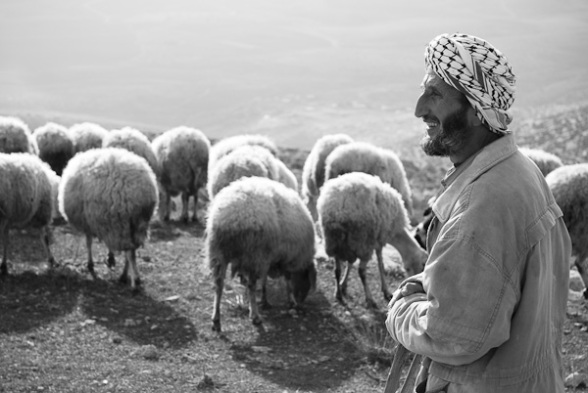
Back to the shepherds, then.  Shepherds were a despised lot in Jesus' time. You can lump them in with tax collectors, prostitutes, and Samaritans.  Of course, as we have seen throughout God's interaction with humanity, this makes them prime candidates for a special grace.  So, it was to them the invitation was extended.  The much discussed "wise men" or magi, come later (probably didn't arrive until a year or so after the birth).  

So, as the story goes, as with all angelic visitations, it begins with fear.  It takes a lot to scare a shepherd who defends his flock from any number of hazards; they are a grizzly lot.


But, as the gospel records, "...they were struck with great fear".  The appeal of the angel not to fear is based upon the message of a savior that will "be for all the people."  This is followed by a "multitude of the heavenly host" singing "Glory to God in the highest."  Quite a night for the shepherds, and some essential truths about the nature of God and salvation for us tonight.

Like God's appointing David as king (the least likely candidate), God's favor rests on Mary, Joseph, outsiders like the Magi and shepherds.  Notice the absence of anyone really important like Temple priests, scribes, Pharisees, important legates or even the chief priest.  God's dealing once again with the complete outsiders, widely believed to be outside of salvation history.  How ironic, then, that these were the people most intimately associated with God's arrival as the Christ.

If Advent has sharpened our senses for seeking justice and finding a place with the poor to be in the right place; this visitation of the shepherds remind us that we are now in the right place at the right time---with the poor, alone, late in the night. Dismal.

But it is with the outcast, far from the comfort of daylight, deep in the night, that God's greeting arrives proclaiming joy and salvation.  Like so much of what God has done in his relationship with humanity: "Who woulda thought?"

In your deepest moment of darkness and doubt,  when your prayers are bouncing back off of the ceiling, ridiculing your attempt to reconnect with God after seemingly failing every time, I want to remind you that those prayers that you think mock your devotion made it through.  They were in God's heart before they ever left your lips. Like the shepherds, the most unlikely folks in the most unlikely place, God finds us.  Search no further than your need, your loneliness, your feelings of being left out. For the still small voice of God speaks to you here, now, in this blog, inviting you to come home and find the sign of God being with you in the most humble of circumstances.  Join with Christians worldwide to not give up following the light until it rests over the manger where Christ is to be found---in the most unlikely place, at the most unlikely time. 

Sunday, December 13, 2015

Third Sunday in Advent

"Thy Kingdom Come", but we're not done!

Fire and water: two compelling, dynamic images linked to communion with God and the salvation of Christ.  In today's gospel, John the Baptist famously denies he is Messiah, but rather preaches repentance and conversion to high ethical standards as preparation for Messiah.  The two pericopes in Luke fit well into the theme of Advent, as we focus on preparing for God to touch humanity in a new way.

John exhortation to ethical integrity is in response to a disciple asking, "Teacher, what should we do?"  It seems the fitting question to John's earlier (outside today's reading) proclamation that "Even now the ax is lying at the root of the trees; every tree, therefore, that does not bear good fruit is cut down and thrown into the fire."  When faced with such destructive wrath, the disciples needed to know what to do, because they needed to get started.

What is interesting is John's focus on doing before becoming; he is the quintessential existentialist---existence before essence.  You want justice? Become just.  You want peace? Become peaceful.  You want salvation from the wrath of God? Welcome God into your midst.

The great line from Matthew 25:41-45 resonates with these leading questions:

“Then he will say to those on his left, ‘Depart from me, you who are cursed, into the eternal fire prepared for the devil and his angels. 42 For I was hungry and you gave me nothing to eat, I was thirsty and you gave me nothing to drink, 43 I was a stranger and you did not invite me in, I needed clothes and you did not clothe me, I was sick and in prison and you did not look after me.’
44 “They also will answer, ‘Lord, when did we see you hungry or thirsty or a stranger or needing clothes or sick or in prison, and did not help you?’
45 “He will reply, ‘Truly I tell you, whatever you did not do for one of the least of these, you did not do for me.’


Sunday, November 22, 2015

Christ the King

"My kingdom does not belong to this world"  --Jesus, The Gospel of John

There is that famous line from Mel Brooks's movie History of the World: Part I, "It's good to be king!"  Being king brings up beautiful imagery of elaborate court ritual, absolute authority, and feasting; sounds a lot like the institutional church!   But Jesus' words to Pilate betray this image of opulence.  When asked about his kingdom, Jesus replies, "My kingdom does not belong to this world" (New American Bible).  Another translation has it as "My kingdom is not of this world"(New International Version).  The sense of Jesus' reply is that his kingdom is neither the kingdom of Rome nor the kingdom envisioned by the religious authorities; both groups lose.

The Solemnity of Christ the King that embraces Jesus as king is relatively new.  It was established in 1925 to counter what the Church saw as an increasing tendency to worship human wisdom and power, which was loosely defined as modernism.  By later positioning the solemnity at the end of the Church's liturgical year in 1969, it further enhanced its standing as the summit of Christ's rule, and, implicitly, the Church as Christ's kingdom.

The songs and imagery associated with this celebration, however, often blunt the irony of Christ as king.  The usual image is of a resurrected, non-bloody, Jesus hovering (rather than being nailed) on the cross.  The image of Christ as king is ironic because he is the king with a crown of thorns with a procession of humiliation and a knightly court of cowards.  It seems, as St. Paul writes in his letter to the Corinthians  "For the message of the cross is foolishness to those who are perishing, but to us who are being saved it is the power of God."

The image of Jesus as king nailed to the cross speaks of a different kind of power than the power of earthly kingdoms.  In a general audience at the Vatican, Pope Benedict XVI suggests ". .the Cross reveals ‘the power of God’ which is different from human power; it reveals, in fact, His love.” 

The power of God's kingdom as embodied by Jesus' death isn't exclusively revealed by the resurrection, although the saving power of God is most apparent here. It is the magnitude of God's love for His creation in self-sacrifice that shows Christ's true power as king.  

The ultimate love is the love that sacrifices self for another. This is the true power that defines Christ's kingdom.  This is why evil can never ultimately triumph over good; evil avoids self-sacrifice.  Evil always seeks what is best for the self over and against the other.  It destroys community and ultimately destroys itself.

Self-sacrificing love, on the other hand,  is the ultimate Christian act where one falls into the opened arms of Christ on the cross, trusting in the power of God's ability to bring life from death.  Christ's kingdom, indeed, is not of this world, but it is for this world.  Nothing is of more importance than conforming ourselves to this likeness of Christ as King.

Saturday, November 7, 2015

Twenty-fourth Sunday after Pentecost


From Barrenness to Blessedness: Giving from One's Poverty

Today's gospel is a couple of stories sewn together by Mark.  The first story is about the victimizing of the poor by the religious authorities of Jesus' time, the scribes.  The poor were represented by the widows who had no social standing and were even less reputable if not associated with a man (husband, older brother, or father).  They were truly "the least and the last".  The focus of this story is the ostentatious behavior of the religious elite whose worship was more show than substance in their grand robes and places of honor at worship (as a priest, this part of the gospel always gets a little uncomfortable).  As is written: "They devour the houses of widows and, as a pretext recite lengthy prayers. They will receive a very severe condemnation".

Juxtaposed with this narrative is the account of the widow who gives what little she has, but is accorded greater praise than those who give much more but give from their abundance. The widow's gift is truly a sacrifice; the gift of the rich is simply for show.  These two elements of the narratives complement one another: sacrifice versus show.

Unfortunately, the deeper meaning of this gospel is often lost in how it is used to elicit more money from congregations--"Give till it hurts, like the widow."  But what Jesus is getting at is more profound than being generous with one's money. 

As our lives are gifts, it is incredible to realize that our blessedness lies not only in our talents and riches but also in our sheer incompetence.  I'm not suggesting that our gifts are worthless, but too often our gifts are where we find gratification for our egos.  We can easily lose our gratitude by hiding our incompetence and displaying our gifts, so that communities take on a competitive nature for a type of ego-gratifying perfection, whereas Gospel perfection comes in our vulnerability to one another---our willingness to share our weaknesses as well as our strengths.  God's great love of humanity resulted in his self-sacrifice in Christ.  Love compelled this.  We, too, when we are living from our love for one another don't hide behind our strengths and make a show of our competencies, but allow others to see our in-competencies as well; giftedness embraces both our strengths and weaknesses.  Paul's famously paradoxical statement now is a bit less paradoxical: "That's why I take pleasure in my weaknesses, and in the insults, hardships, persecutions, and troubles that I suffer for Christ. For when I am weak, then I am strong" (2Cor. 12:10).